
I still remember my first toy bin.
It lived in the corner of a small office in a community mental health clinic. Mismatched figures. A worn sandtray. A basket of puppets with one missing eye. It wasn't glamorous — but it worked. Kids walked in, scanned the room, and something in them relaxed. The bin told them, “this is a place where you get to play.”
That bin taught me more about child therapy than most of my textbooks did.
So when I first heard about digital play therapy platforms, I'll be honest, I was skeptical. Would it really compare? Could a screen hold the same magic as a room full of physical toys and art supplies?
After spending significant time using and researching digital tools in my practice, my answer is this: it's not a replacement. It's an evolution. And child psychologists across North America are starting to take notice.
.png)
Let's start with the why behind the what.
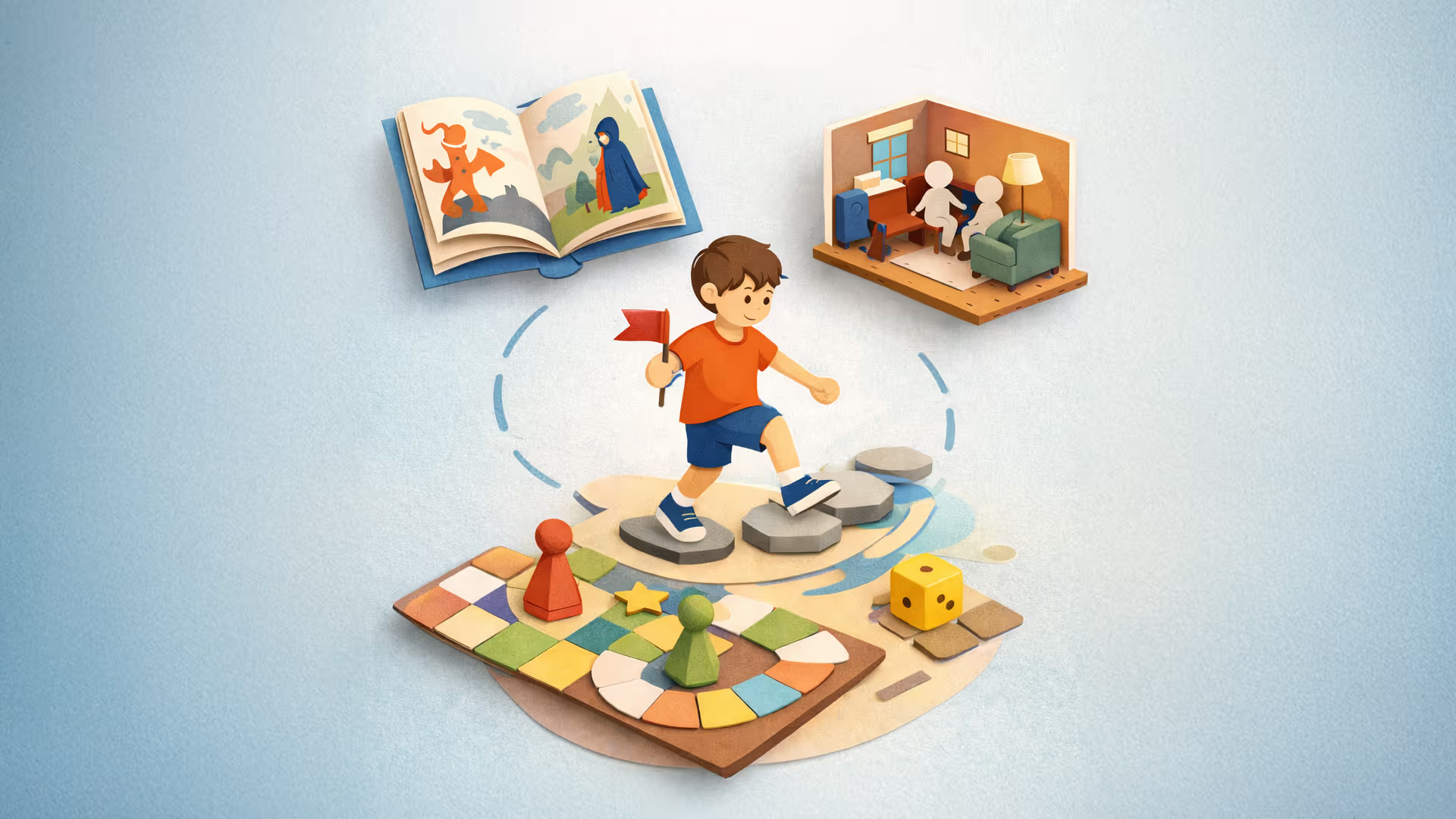
The toy bin isn't just a collection of stuff. It's a carefully curated therapeutic environment. Research in play therapy consistently shows that when children are given access to expressive, symbolic, and creative tools in a safe relationship, they process emotions they can't yet put into words.
Gary Landreth, one of the pioneers of child-centred play therapy, described the toy room as the child's world. It is a place where they have control, choice, and the freedom to express without judgment.
None of that has changed. What has changed is where therapy happens — and who has access to it.
.png)
Here's something that doesn't get talked about enough: a lot of kids never make it to the toy bin.
Rural families. Single parents without reliable transportation. Kids in school refusal. Children with medical needs. Families navigating poverty or unstable housing. The barriers to in-person therapy are significant — and for many of the children who need it most, they're insurmountable.
Telehealth changed that. And it didn't just change access — it changed outcomes. A growing body of research on virtual therapy delivery shows comparable effectiveness to in-person care for a range of childhood presentations, including anxiety, behavioural challenges, and trauma.
But here's the catch: you can't just put a therapist on a Zoom call and expect the same engagement you'd get in a room full of toys. Children need stimulation. They need to do something. They need to play.
That's exactly the problem digital play therapy platforms were built to solve.
.png)
When I describe digital play therapy to colleagues who haven't tried it, I often see a certain look — polite interest mixed with a fair amount of "I'll believe it when I see it."
So let me paint a picture.
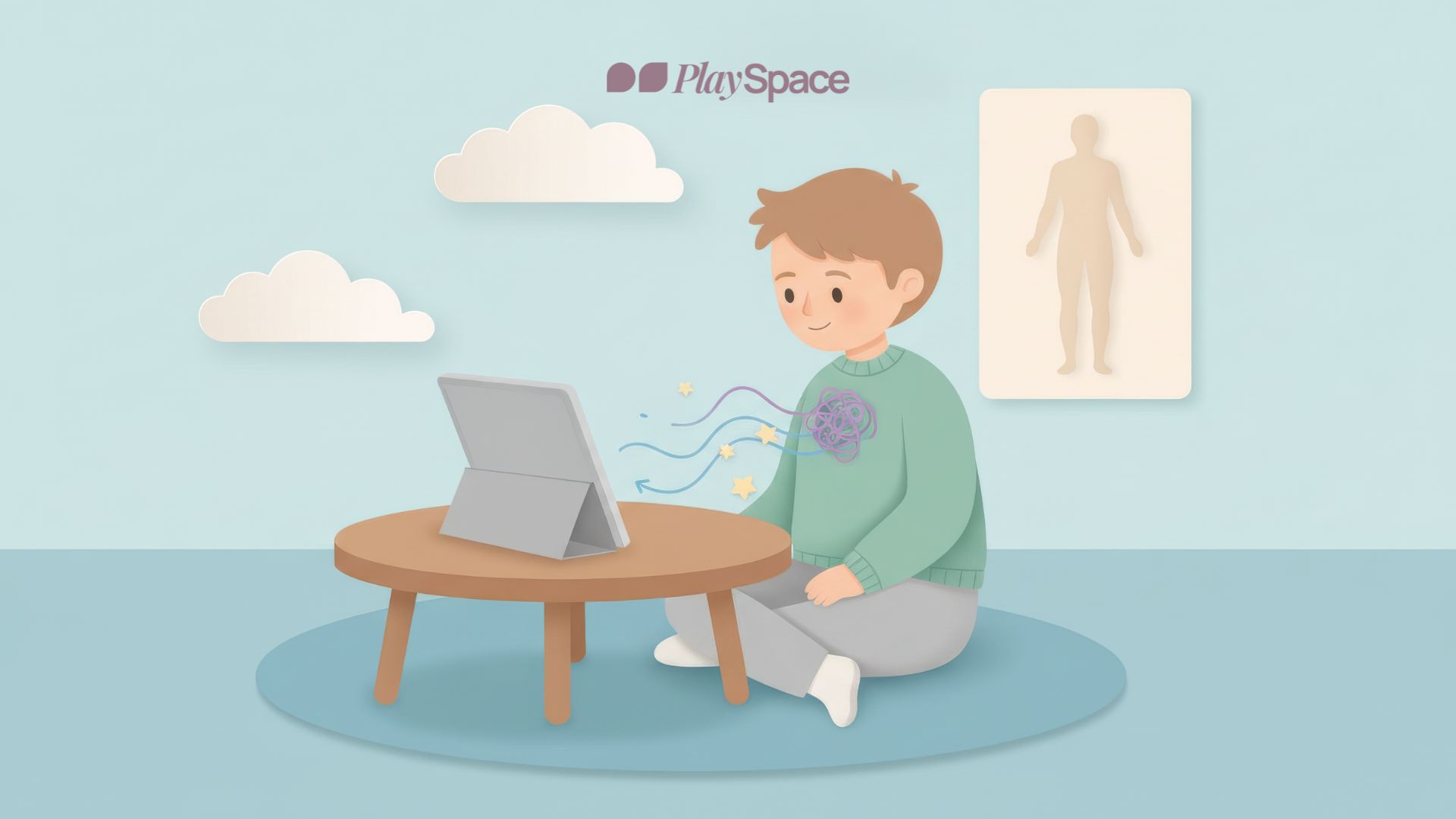
A seven-year-old named “Marcus” came to me mid-pandemic. Generalized anxiety, school avoidance, and increasingly dysregulated at home. His parents were exhausted. He was scared. In-person therapy wasn't an option for their family at the time.
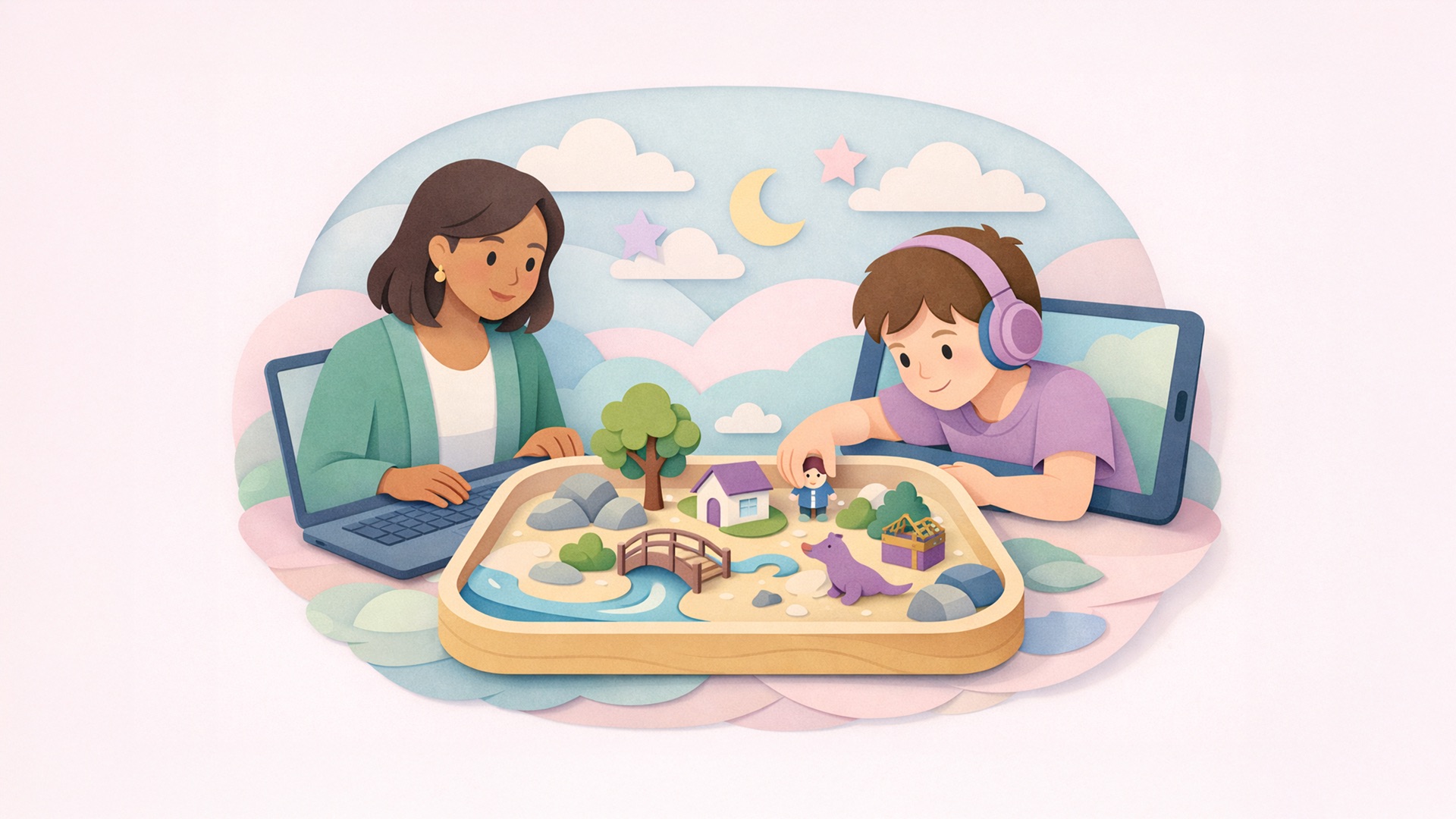
In our first virtual session, I opened PlaySpace on my screen and invited Marcus to explore. Within minutes, he was building a scene in the digital sandtray that included a volcano in the middle, people running away, and a small figure hiding behind a tree.
We didn't talk about his anxiety directly for weeks. We didn't need to. The sandtray said it all.
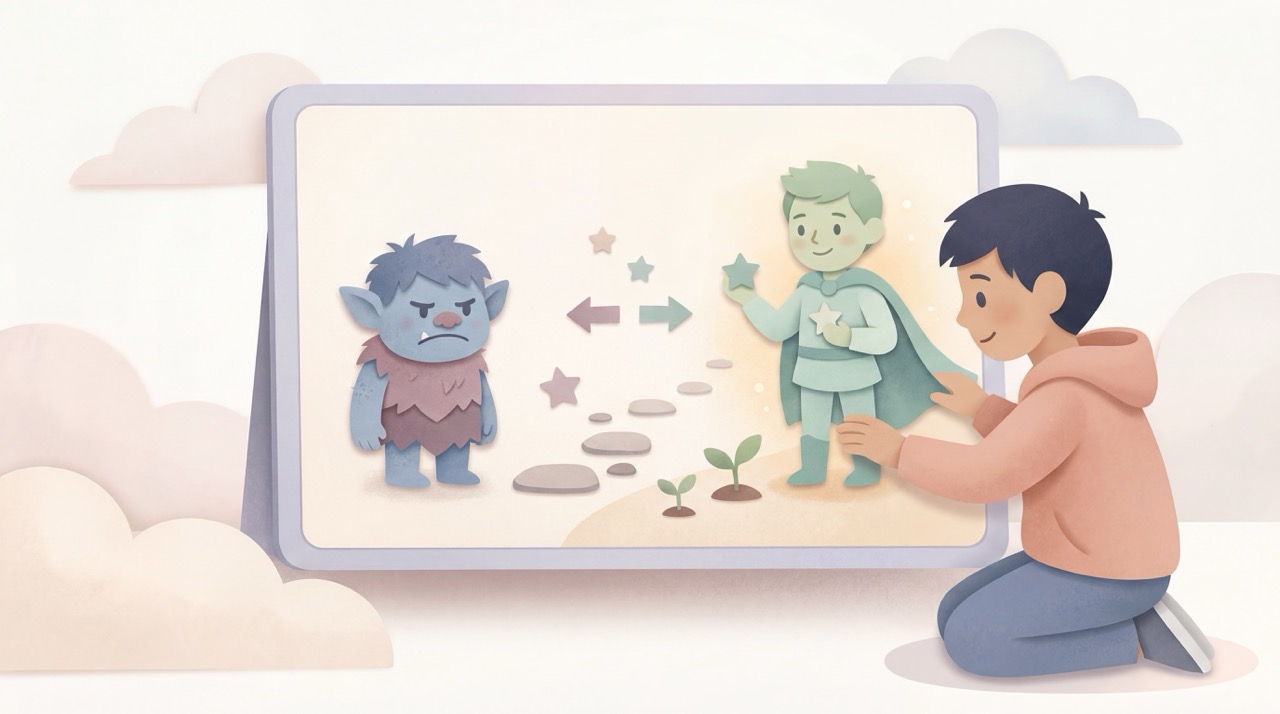
Over time, Marcus moved from the sandtray to the dollhouse, building and rebuilding family scenarios. We used the AI storybook creator to write stories about characters who learned to be brave. We played multiplayer games that gave him safe opportunities to practice frustration tolerance — and to notice, name, and regulate what happened in his body when he lost.
His mother told me at the end of his fourth month: "I don't know what you're doing, but he's sleeping again."
That's what digital play therapy can look like. Not a watered-down version of the real thing, it can be a different medium for the same powerful work.
.png)
Child psychologists are paying attention to digital play therapy for a reason. The evidence base is young but growing, and it's encouraging.
Here's what we know so far:
• Therapeutic alliance transfers virtually: Studies on telehealth therapy consistently show that therapeutic alliance can be built and maintained through a screen. For children, engagement tools that simulate in-person play experiences appear to strengthen this further.
• Expressive therapies work in digital formats: Art therapy, narrative therapy, and play-based approaches have all been adapted successfully to digital delivery. The medium changes; the mechanism of change does not.
• Children are native digital users: For many of today's six-to-twelve-year-olds, a screen is not a foreign object. It is a primary mode of engagement with the world. Meeting them in that space is clinically strategic, not a compromise.
• Parental engagement increases: Digital platforms create easier opportunities for parents to observe sessions, access resources, and continue therapeutic work between appointments, which is a significant advantage for the generalization of skills.
None of this means we throw away our physical toy bins. Many of us practice in hybrid models, using digital tools both virtually and in the room. But the evidence is building: digital play therapy is not a lesser version of play therapy. It is play therapy — adapted for where children live and learn today.
One of the questions I get most often from colleagues is: "But can it really replicate the toy bin?"
My answer: In some ways, yes. In other ways, it goes further.
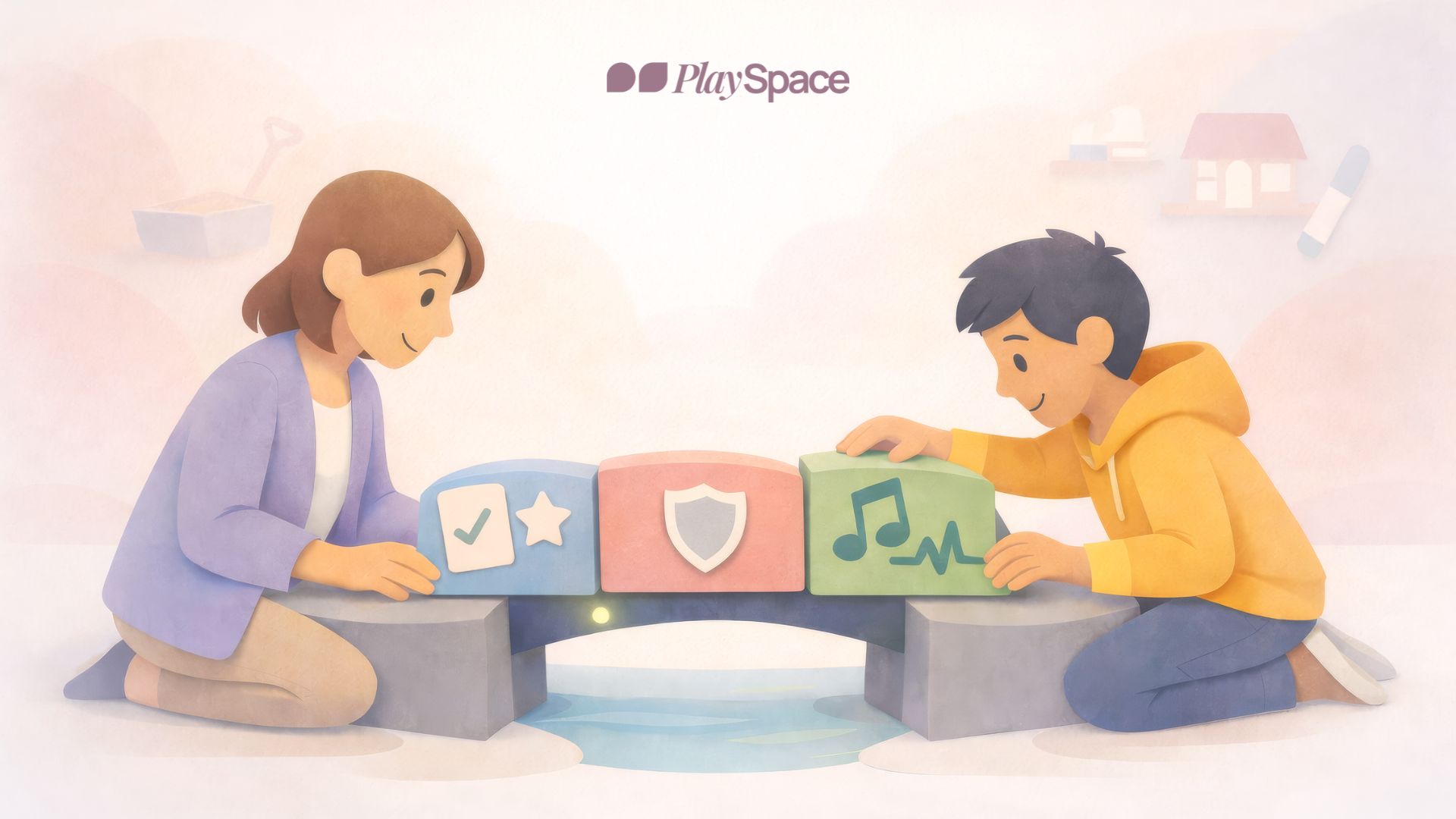
Here's how key elements of the traditional play therapy room translate and sometimes expand, in a platform like PlaySpace:
.png)
• Sandtray: The digital sandtray in PlaySpace allows children to select from hundreds of miniature figures and scenes to build symbolic worlds that mirror the projective, expressive function of a physical sandtray without geographic or inventory limits. Children in rural communities can access the same therapeutic medium as those in well-resourced urban clinics.
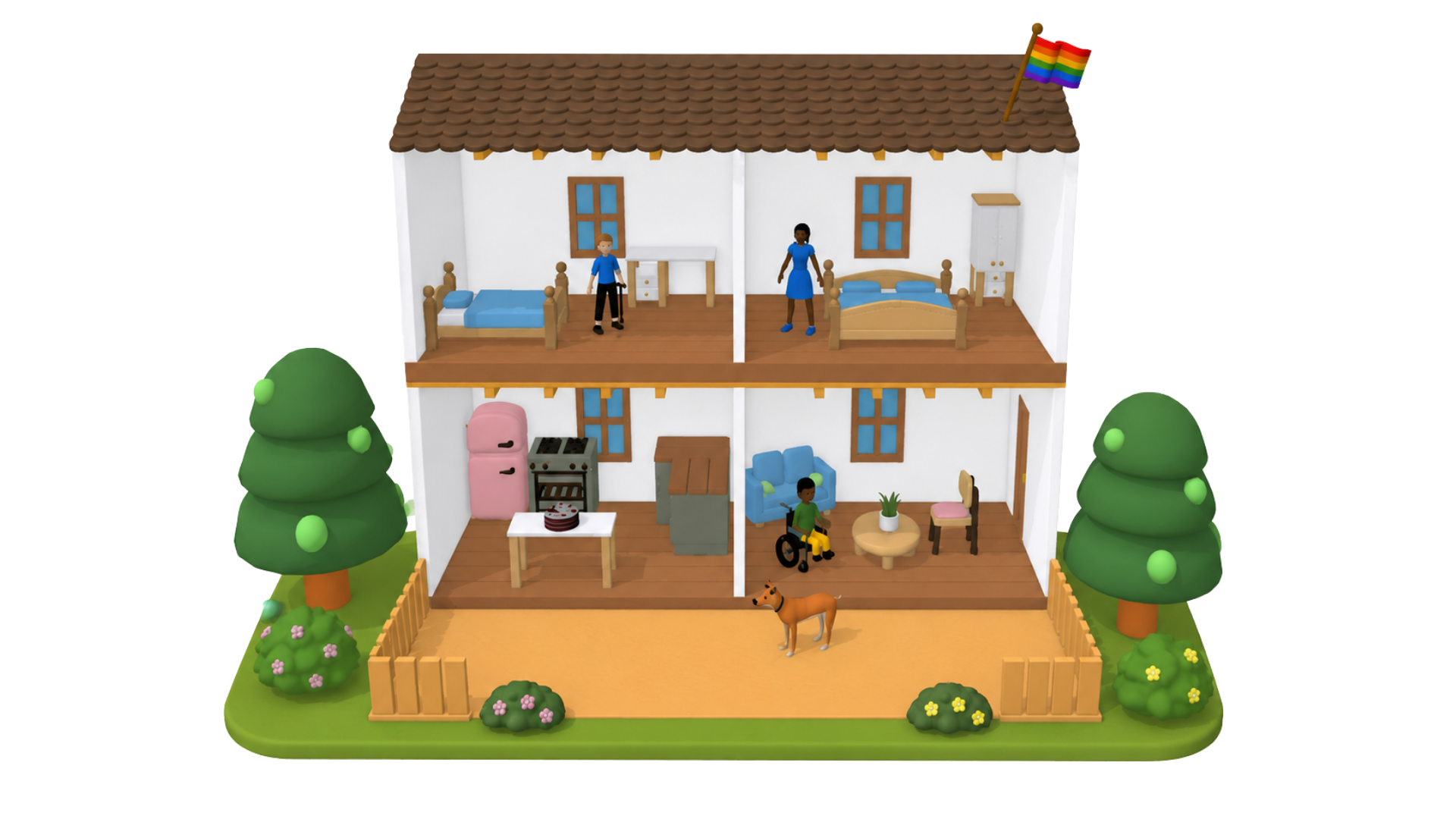
• Dollhouse: A digital dollhouse creates space for symbolic family play, narrative exploration, and role rehearsal, all of which are classic functions of dollhouse play in child therapy, accessible from any device.
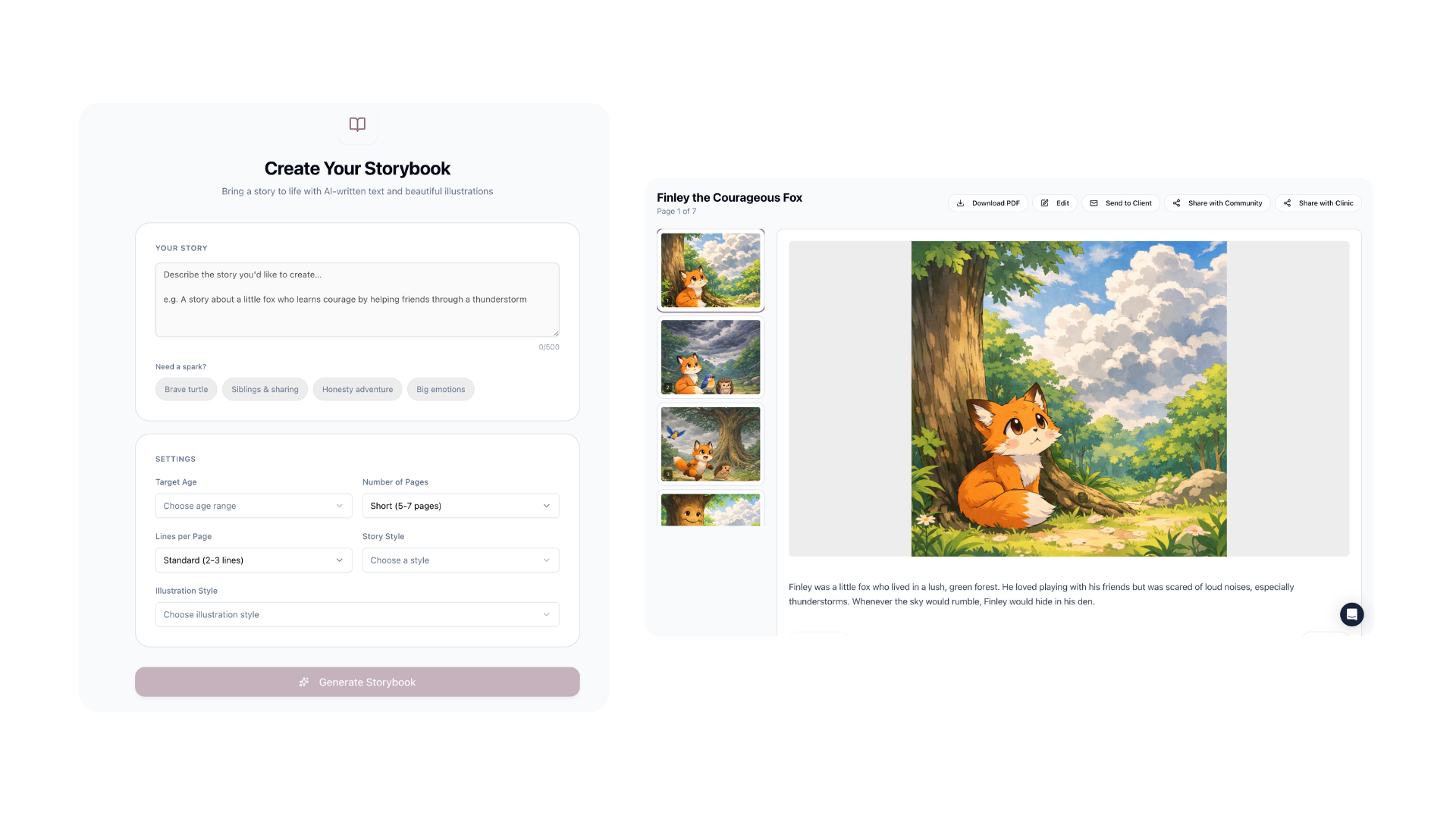
• Storytelling: The AI storybook creator supports bibliotherapy by helping clinicians create personalized stories featuring characters who face similar challenges. For anxious or trauma-impacted children, this distance technique is powerful.
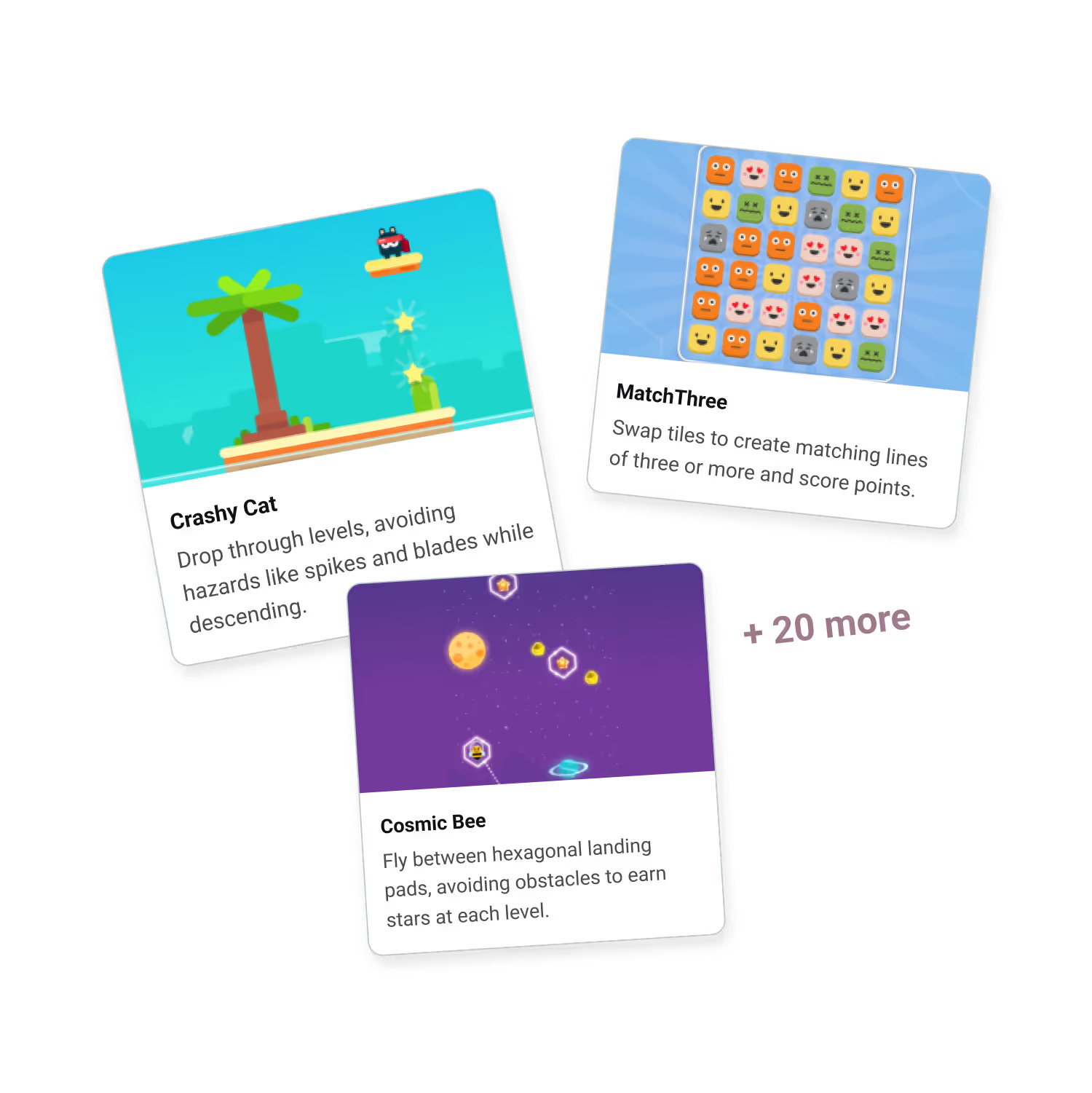
• Games: Both single-player and multiplayer games within PlaySpace offer structured opportunities to build frustration tolerance, emotional regulation, and social skills. For therapists who use directive approaches, games create natural therapeutic moments.
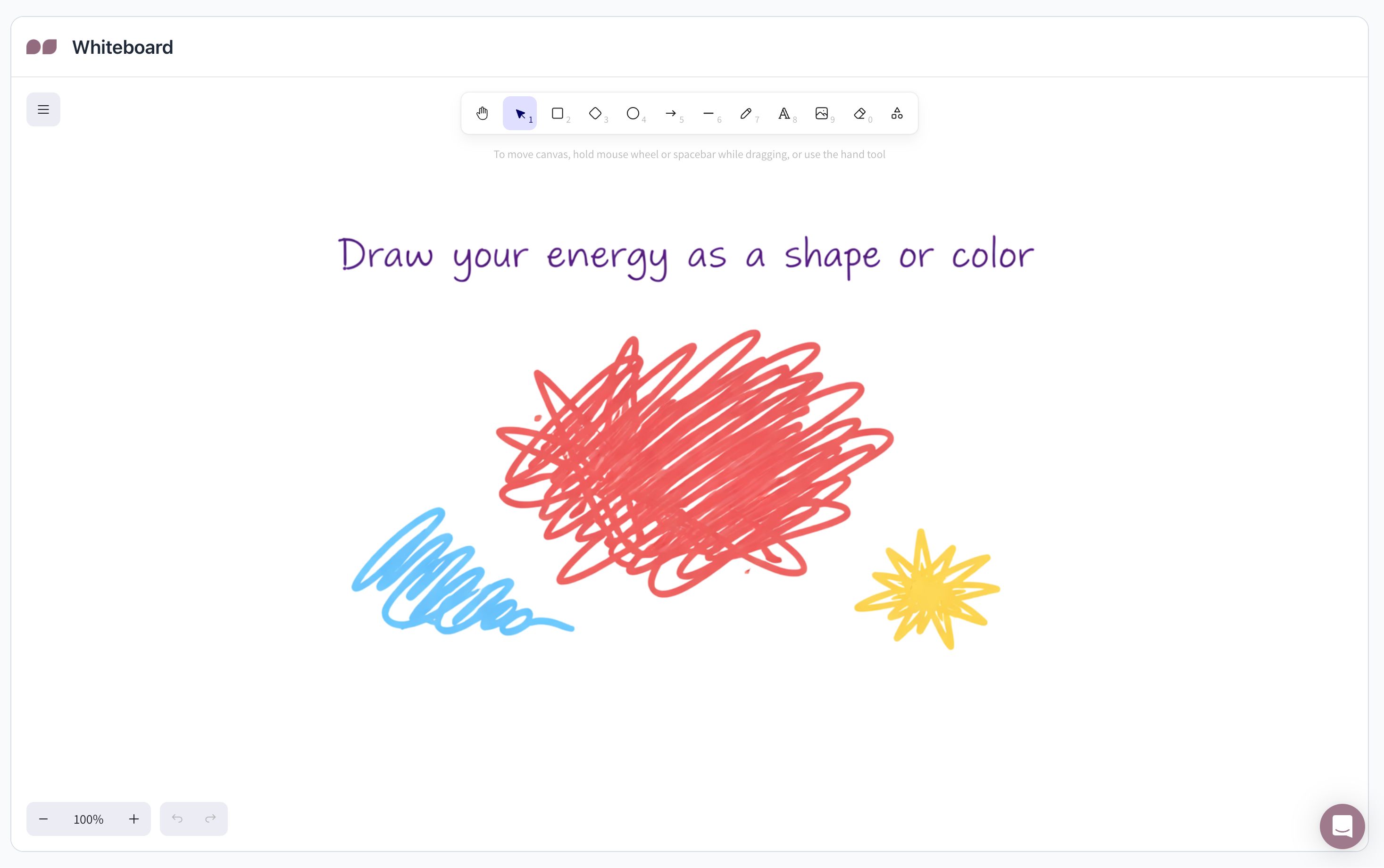
• Whiteboard and activity shelf: Open-ended creative tools that mirror the art supplies and blank paper in a physical therapy room, supporting expression, psychoeducation, and skill-building.
The toy bin went digital. And it brought a few things we couldn't fit in the old corner cabinet.
If you're reading this as someone who loves your physical toy bin and feels uncertain about going digital — I see you. Here's what helped me, and what I share with clinicians I supervise:
• Start with one tool: Don't try to replicate your entire playroom at once. Pick one digital tool and explore it with a willing client. Let curiosity lead.
• Follow the child: As in all child-centred work, let the child guide the session within the platform. Notice what they gravitate toward. Resist the urge to direct too quickly.
• Use it in person too: PlaySpace isn't only for telehealth. Many therapists open PlaySpace on a tablet or laptop in their physical office, giving children a digital tool alongside physical ones. This is especially powerful for children who are highly technology-oriented.
• Name the tool, not the tech: With young children, simply say "I have a special play place I want to show you" — not "we're going to use a platform." The therapeutic frame matters more than the medium.
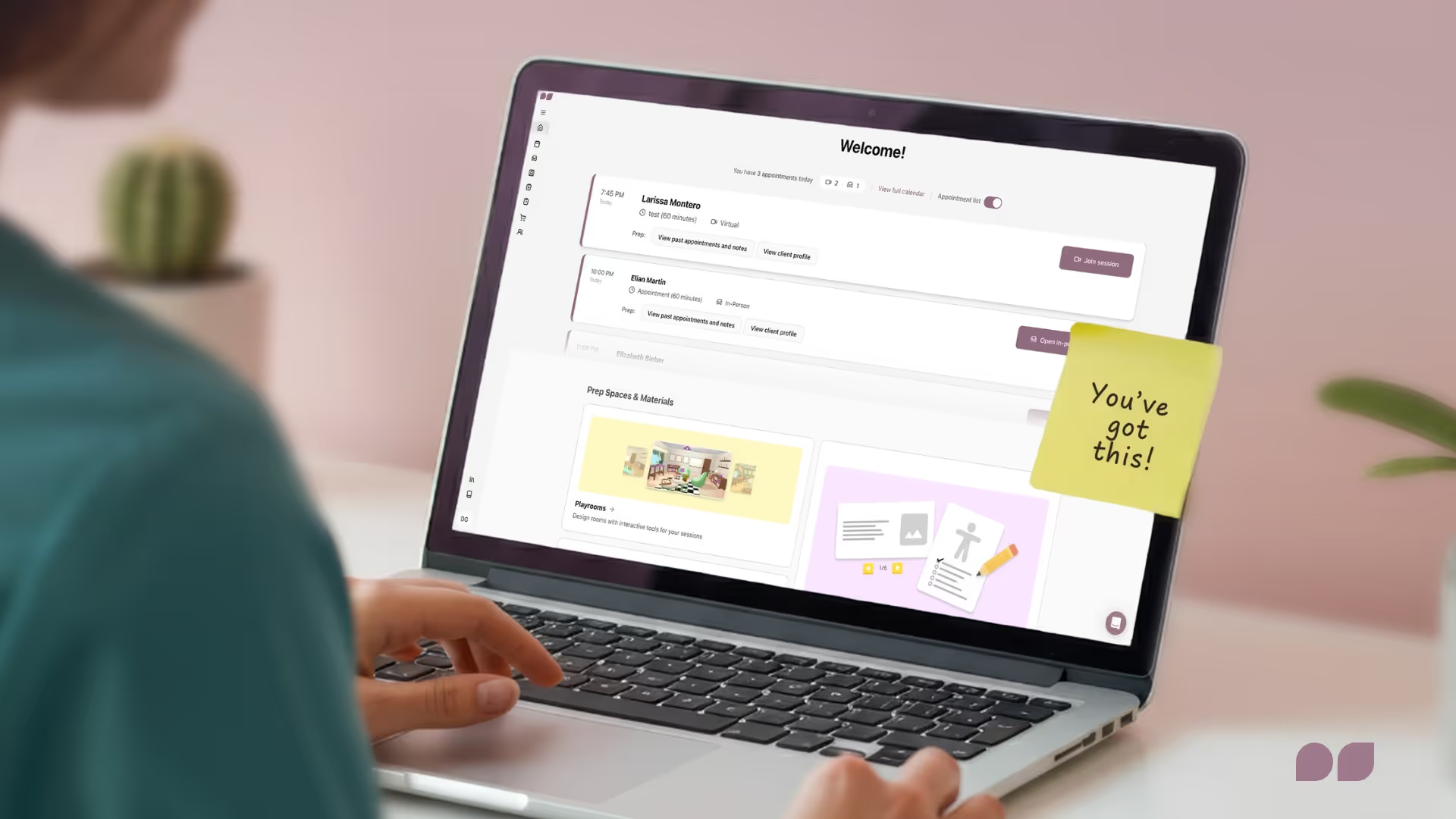
• Use the community library: Don't build from scratch. PlaySpace's community library is full of clinician-created activities tailored to common presentations. It's a shortcut to clinical quality when you're getting started.
In all of this, I want to say something clearly: the technology is not the therapy.
The toy bin was never the therapy either. It was the container. The therapist — their presence, attunement, reflection, and relationship — was always the active ingredient.
Digital platforms like PlaySpace are a better container for a world where children need care anywhere, anytime. They expand access. They increase engagement. They reduce dropout. They give clinicians more tools, more flexibility, and more creative reach.
But the child sitting across from you (or on the other side of the screen), needing to feel seen and safe? That part has not changed. It will never change. And it's still entirely yours to offer.
PlaySpace gives you a full digital toolkit to meet every child where they are.
Try PlaySpace free today at PlaySpace | The All-In-One Digital Platform Design for Therapists
and explore the tools your clients have been waiting for.
Your toy bin just got an upgrade.
.jpg)
.avif)
Subscribe to our weekly Newsletter
By clicking 'Submit,' you confirm that you have read and agree to the Privacy Policy, Terms of Use, and Customer Agreement.




.jpg)

.jpg)
.jpeg)