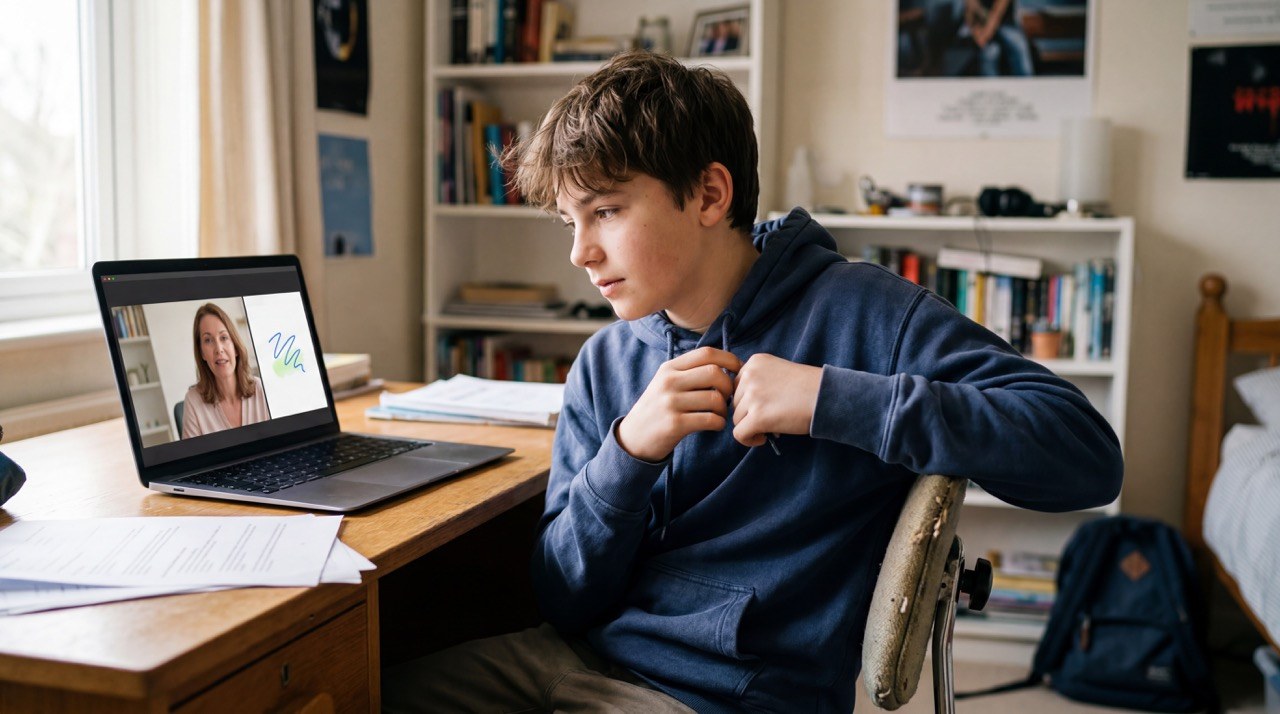
For therapists working with children and teens online you may notice that they are:
- Spinning in their chair
- Clicking to another tab
- Texting under the desk
while you’re mid-intervention.
Online therapy with children and teens can feel like competing with the entire internet. And when attention drifts, rapport can too.
But here’s the reframe: distraction isn’t defiance. It’s dysregulation. It’s information.
When we respond to state instead of behavior, engagement shifts. And engagement drives outcomes.
1. Start with State, Not Strategy
Before we open a worksheet or jump into CBT skills, pause.
Ask yourself:
What state is this child in right now?
- Overstimulated?
- Under-aroused?
- Anxious?
- Avoidant?
- Mentally fatigued?
Distracted behavior is often regulation-based, not resistance-based.
Try a 3-Minute Regulation Reset:
Use the Sandtray to “represent what your brain feels like today.”
Open the Whiteboard and draw their energy level as a shape or color.
Use a feelings check-in worksheet pre-loaded onto your Activity Shelf
These playful entry points:
- Reduce defensiveness
- Increase safety
- Give you real clinical data
When kids feel understood, attention follows.
2. Make Participation Active, Not Passive
In virtual therapy, passive listening is a fast track to zoning out. Engagement rises when clients create, move, and interact.
Instead of:
“Tell me about your worry thoughts.”
Try:
“Let’s turn your worry into a character.”
Design the worry monster together on the Whiteboard.
Create a live CBT triangle using Slides, letting the child fill in thoughts, feelings, and behaviors in real time.
Active creation boosts dopamine. Dopamine boosts attention. Even teens who resist “play” often respond to creative control.
3. Leverage Choice to Increase Buy-In
Choice equals ownership. Ownership equals engagement. Especially for adolescents.
Instead of directing the entire flow, offer structured options:
“Do you want to work through this using a game, a story, or drawing?”
Giving choice doesn’t reduce your clinical direction. It strengthens partnership.
And partnership strengthens rapport, which is the number one predictor of positive therapeutic outcomes.
4. Plan for Movement (Yes, Even Online)
Attention and movement are neurologically linked. If a child with ADHD is fidgeting, they may not need firmer limits, they may need a regulation reset.
Quick Virtual Movement Boosters:
- 60-second scavenger hunt (“Find 5 items that are blue!”)
- Emotion charades on camera
- Stand-and-stretch while naming coping tools
- “Show me with your body what frustration looks like.”
Then transition into:
- A Multi-Player Game to practice impulse control
- A short worksheet or interactive slide to consolidate learning
Movement is not a disruption. It’s regulation in action. And regulation precedes focus.
5. Close With Reflection and Reinforcement
The final five minutes determine carryover. Instead of ending abruptly, anchor the learning:
- “What’s one thing your brain learned today?”
- Save a screenshot of their Whiteboard creation.
- Ask teens to rate the session from 1–10 and what would make it a 10 next time.
Reflection reinforces agency. Agency increases engagement next week. Consistency builds trust. Trust builds focus.
Engagement Matters More Than Ever
Research consistently shows that therapeutic rapport is the strongest predictor of outcomes.
When children are engaged:
- Attendance improves
- Dropout decreases
- Skill acquisition strengthens
- Emotional safety deepens
At PlaySpace, we believe therapy should feel immersive, creative, and clinically purposeful, whether you’re in a playroom or on a laptop.
Because every child deserves effective, engaging care.
Bring Engagement Back to the Center
Ready to transform distracted sessions into dynamic ones?
Explore PlaySpace’s therapist-built tools:
- Interactive sandtray and dollhouse
- AI-powered story creation
- Multi-player and single-player games

.jpg)