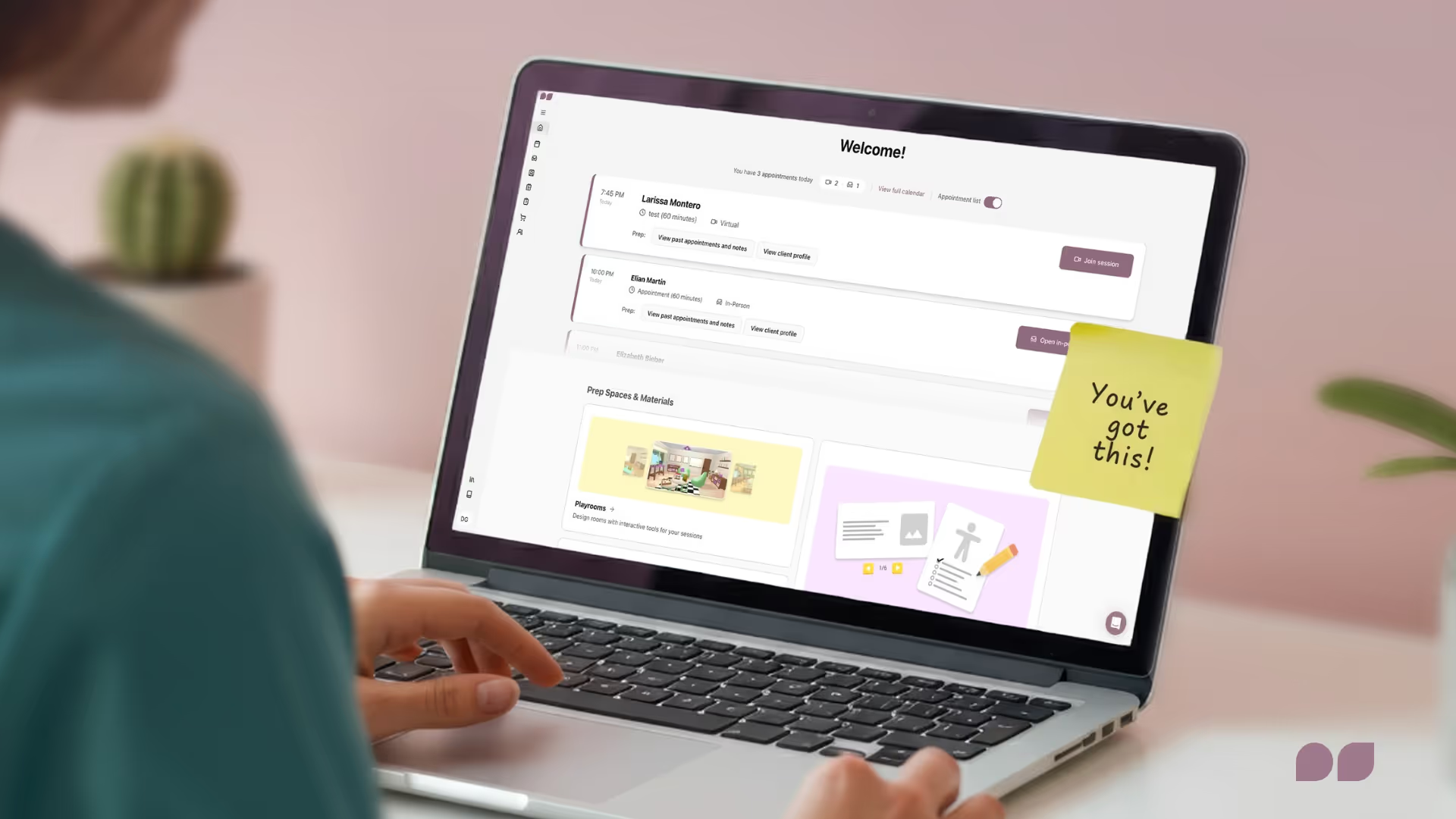

Helping kids build resilience, one turn at a time
He loses and logs off.
She makes a mistake and shuts down.
They don’t get their way and melt down.
Frustration tolerance doesn’t magically develop. It’s practiced. And one of the most natural places to practice it?
During Play!
Multiplayer challenges in therapy create something powerful: safe, structured moments where kids experience disappointment and learn they can survive it.
Let’s explore how to intentionally use multiplayer games in PlaySpace to teach frustration tolerance in children and teens.
Frustration tolerance is the ability to:
Kids struggling with ADHD, anxiety, perfectionism, or emotional dysregulation often have a low frustration threshold. And traditional talk therapy may not always give enough space for kids to practice these skills, but multiplayer games can help by introducing:
Instead of saying:
“If you do your worksheet, we’ll play a game.”
Try:
“We’re going to practice handling frustration through this challenge.”
When you frame the multiplayer game as the clinical tool, you normalize emotional activation.
You might say:
Using Multi-Player Games inside PlaySpace allows you to stay in the emotional moment instead of pausing therapy to “process later.”
The processing happens live and that’s where the learning sticks.
Frustration tolerance isn’t built by avoiding big feelings. It’s built by noticing and navigating them.
During multiplayer challenges:
You’re teaching:
“I can feel this and continue.”
That’s resilience.
The beauty of multiplayer formats? Natural reset points.
Between rounds, insert short coaching moments:
Short. Targeted. Immediate application.
Then back into the game.
Learning + practice + repetition.
When you play alongside a child and lose gracefully, you’re modeling regulation in action.
You can narrate:
Modeling teaches more than lecturing ever could.
For teens, you can even gamify frustration tolerance:
Play becomes exposure therapy in disguise.
For some kids, competition escalates too quickly.
Shift the structure:
Instead of therapist vs. client, try:
This allows practice with:
The goal isn’t winning. It’s growth.
End multiplayer sessions with structured reflection:
Because they activate real emotion in real time and when children practice regulating inside those moments they strengthen their:
At PlaySpace, multiplayer experiences aren’t just games. They’re structured opportunities for skill-building.

.avif)
Subscribe to our weekly Newsletter
By clicking 'Submit,' you confirm that you have read and agree to the Privacy Policy, Terms of Use, and Customer Agreement.



.jpg)
.jpg)

.jpg)
.jpeg)