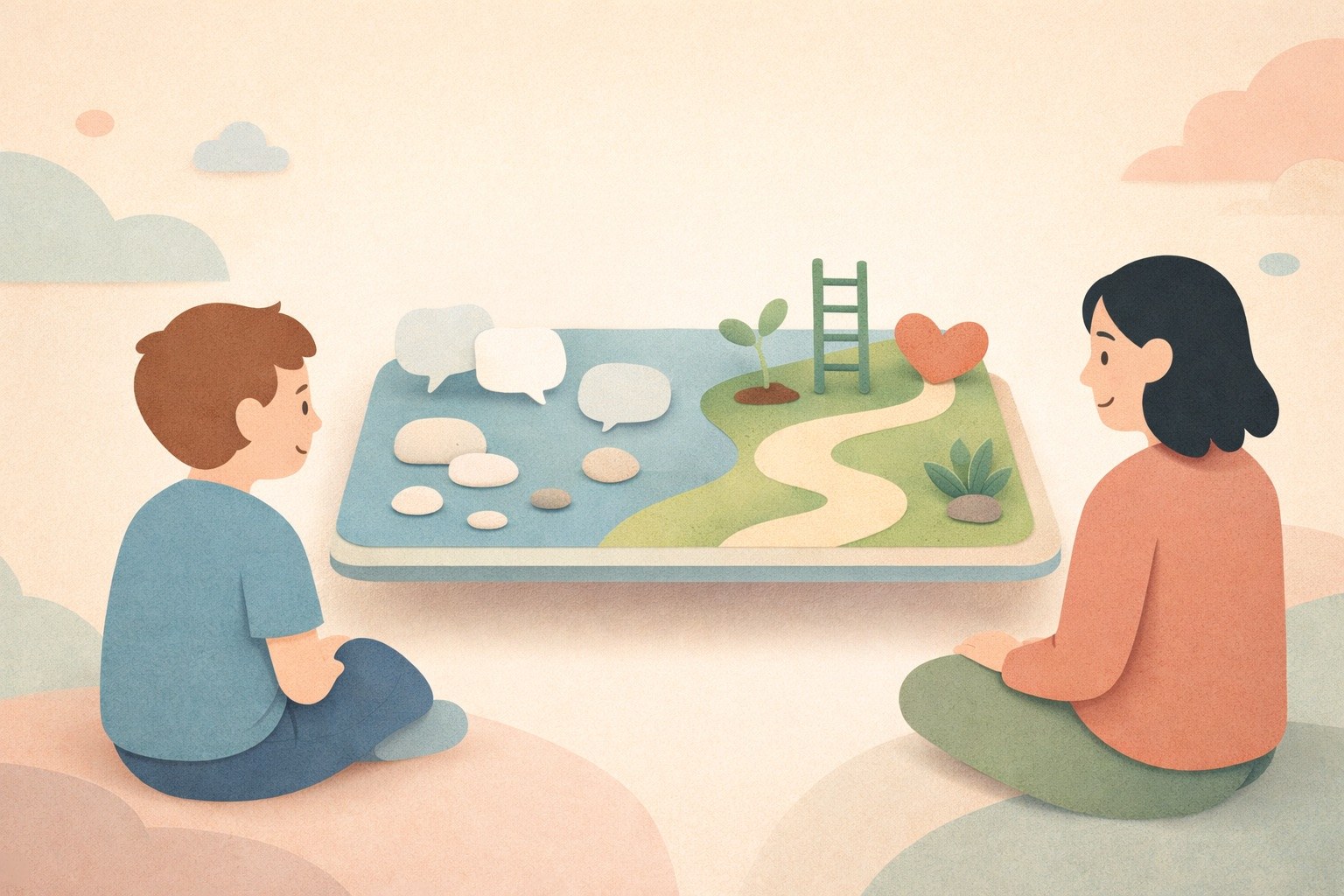

Anxiety can feel overwhelming for young clients. It shows up in restless energy, avoidance, or even silence in the session. While talk therapy often feels too direct, play offers children and teens a safer way to explore what worries them. Through imagination and creativity, anxiety shifts from something hidden into something they can express, understand, and eventually manage.
Why It Matters
Anxiety is one of the most common challenges therapists see in children and teens. It can interfere with school, friendships, and daily routines, but it does not always present in obvious ways. Play helps bring these inner experiences to light without pressuring clients to put their feelings into words before they are ready. When therapists adapt play to address anxiety, they create opportunities for children to build trust, express themselves, and develop lasting coping skills.
When therapists use play to address anxiety, something powerful happens: fear turns into expression, and expression into growth. Through imagination and creativity, children discover that their worries don’t have to stay hidden, they can be shared, understood, and managed in ways that strengthen resilience for the future.
Practical Applications for Therapists
Monsters, Traps, and Hidden Doors: Working with Symbols
Children often struggle to name their fears directly. Instead, they reveal them through characters, battles, or recurring storylines.
- Use the Dollhouse in PlaySpace to create safe, symbolic scenarios. A monster in the living room may stand in for school anxiety, while a locked door may represent social avoidance.
- Allow clients to manipulate characters or props, helping them “move” through their worries in a controlled, imaginative way.
- Once the metaphor is clear, gently reflect: “It looks like the character feels trapped. Does that remind you of any moments in your life?”
Turning Play into Practice: Building Coping Skills
Play is not only a language for expression. It is also a rehearsal space for skills that strengthen resilience.
- The Storybook Builder allows clients to create narratives where characters learn calming strategies or how to overcome fears. This symbolic rehearsal translates into real-world coping skills.
- Drawing in the Whiteboard can support breathing or mindfulness exercises. Invite the client to draw a calming scene while practicing slow breathing alongside you.
- Encourage repetition. When coping strategies are practiced through play, they become more accessible in moments of real anxiety.
Beyond Traditional Play: Creative Expression for Teens
Teens often shy away from traditional play, yet they engage deeply with symbolic and creative outlets.
- Reframe “play” as creativity and self-expression. This shift validates their developmental stage while keeping the therapeutic process engaging and non-threatening.
- Screen sharing music, memes, or short videos can serve as starting points for conversations about anxiety triggers and coping.
- Use collaborative tools in PlaySpace, such as building a digital sandtray scene together, to explore how anxiety shows up in their world.
Play gives children and teens with anxiety a safe and empowering language for healing. By externalizing fears, rehearsing coping strategies, and meeting youth where they are developmentally, therapists can transform sessions into spaces of resilience and growth. With tools like PlaySpace, you can integrate symbolic play, creative storytelling, and digital expression in ways that feel authentic for every client. Anxiety does not have to silence or overwhelm young people. Through play, we help them rediscover their voice, their strengths, and empower them to face challenges with courage.