
The room is small. The bed takes up most of it.
There's a TV mounted too high on the wall, an IV pole beside the pillow, and a rolling tray table that smells faintly of antiseptic. The window looks out onto a car park. A monitor beeps in a rhythm the child has already stopped hearing.
This is where some children spend days. Some spend weeks. Some spend months.
And somewhere in that room, between the medication schedule and the vital checks and the well-meaning visits from relatives who don't quite know what to say, a child is trying to make sense of something that doesn't make sense yet. Their body has become a place they don't recognize. The world they knew is on hold. The people they need most can only stay until visiting hours end.
This is where pediatric psychologists show up.
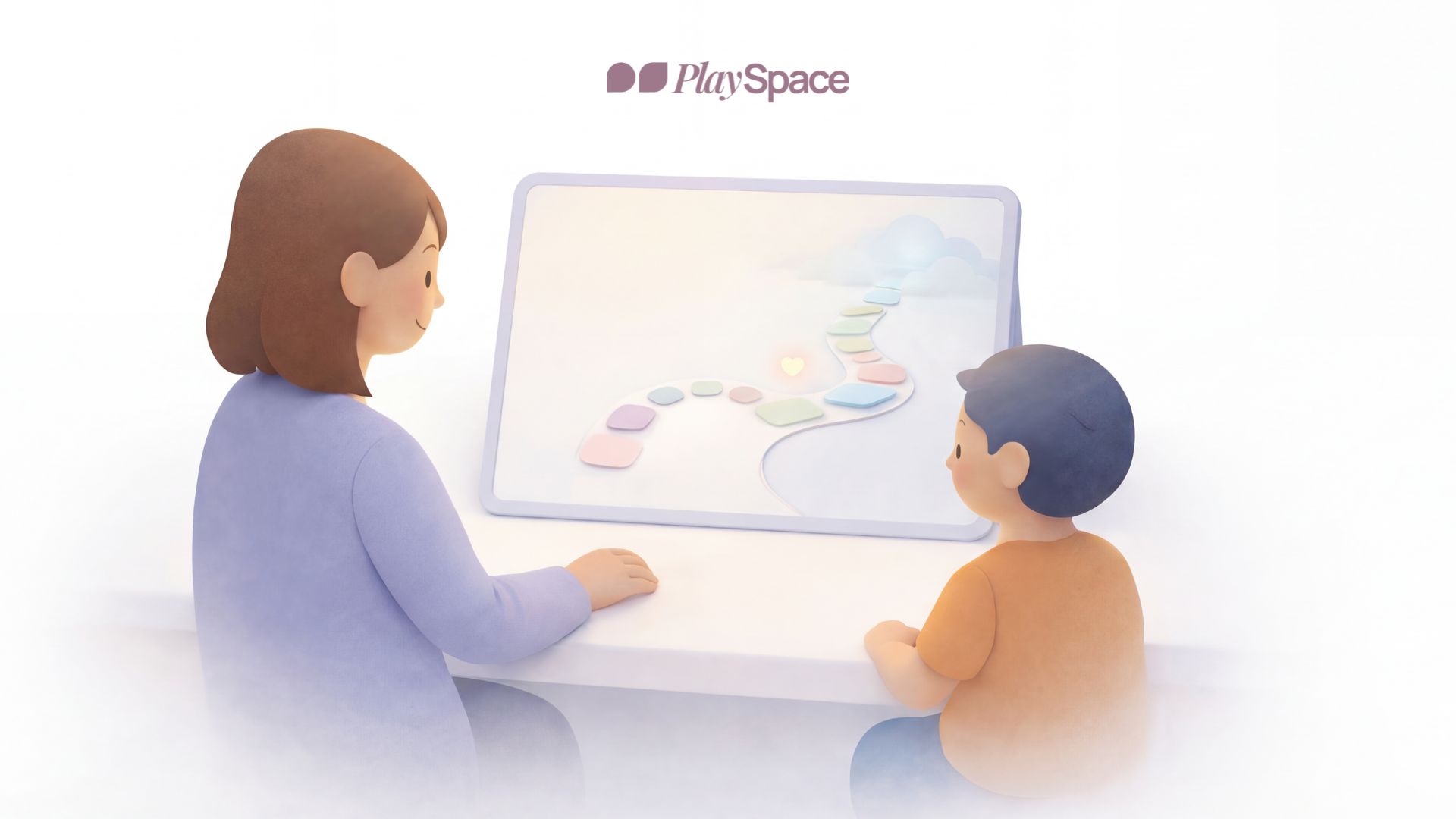
And increasingly, the tools they're bringing with them, or connecting to remotely, are digital. Playful. And clinically precise in ways that are changing what's possible for hospitalized children.
We talk a lot about the medical challenges of pediatric hospitalization. We talk less about the psychological ones, even though the psychological impact of hospitalization on children is well-documented, significant, and in many cases, longer-lasting than the medical event that caused it.
Children who are hospitalized, particularly for extended periods or for serious or frightening diagnoses, are at elevated risk for:
Research consistently identifies hospitalized children as a high-need, underserved population for psychological intervention, not because services aren't valued, but because the traditional therapy model doesn't fit the environment.
You can't bring a toy bin into an ICU. You can't ask a child who has just had surgery to sit up and engage with art supplies. You can't run a 50-minute session when a care team might walk in at any moment, or when the child is nauseated, exhausted, or simply terrified.
What you can do is meet them where they are. Physically. Emotionally. Clinically.
That's where digital play therapy is changing the picture entirely.
Before we talk tools, it's worth noting why play is the clinical modality of choice for hospitalized children.
Medical play has been recognized as a therapeutic and developmental necessity for children in healthcare settings for decades. From the early work of Anna Freud observing children in wartime hospital settings to the development of formal Child Life programs across North America and the UK, the field has understood that children who are given the opportunity to play through their medical experiences show markedly better outcomes.
Play is the mechanism by which children:
For the hospitalized child, play is not a distraction from their medical situation. It is how they digest it.
Pediatric psychologists and child life specialists working in hospital settings have always improvised. A whiteboard on the wall becomes an art canvas. A latex glove becomes a puppet. A tongue depressor becomes a wand in a story about a child who is magic enough to heal herself.
The creativity of bedside clinicians is remarkable. But improvisation has limits, and consistency matters in psychological care, especially for children whose world has become deeply inconsistent.
When I speak with colleagues who work in pediatric settings, the themes they return to again and again are:
Digital play therapy platforms check every one of those boxes. And for the specific psychological needs of hospitalized children, one tool within those platforms is emerging as particularly powerful: medical play.
PlaySpace was built on a foundational belief: that therapy tools should reflect the real lives of the children who use them.
For most children, the world of play looks like homes, families, schools, animals, and imaginative adventures. PlaySpace's original dollhouse was designed to honour that world, to give children a symbolic domestic environment they could populate, rearrange, and tell stories through.
But for a significant number of children, such as those living with chronic illness, those facing surgery, those who have spent weeks or months on a pediatric ward, the most important environment in their life right now is not a home. It's a hospital.
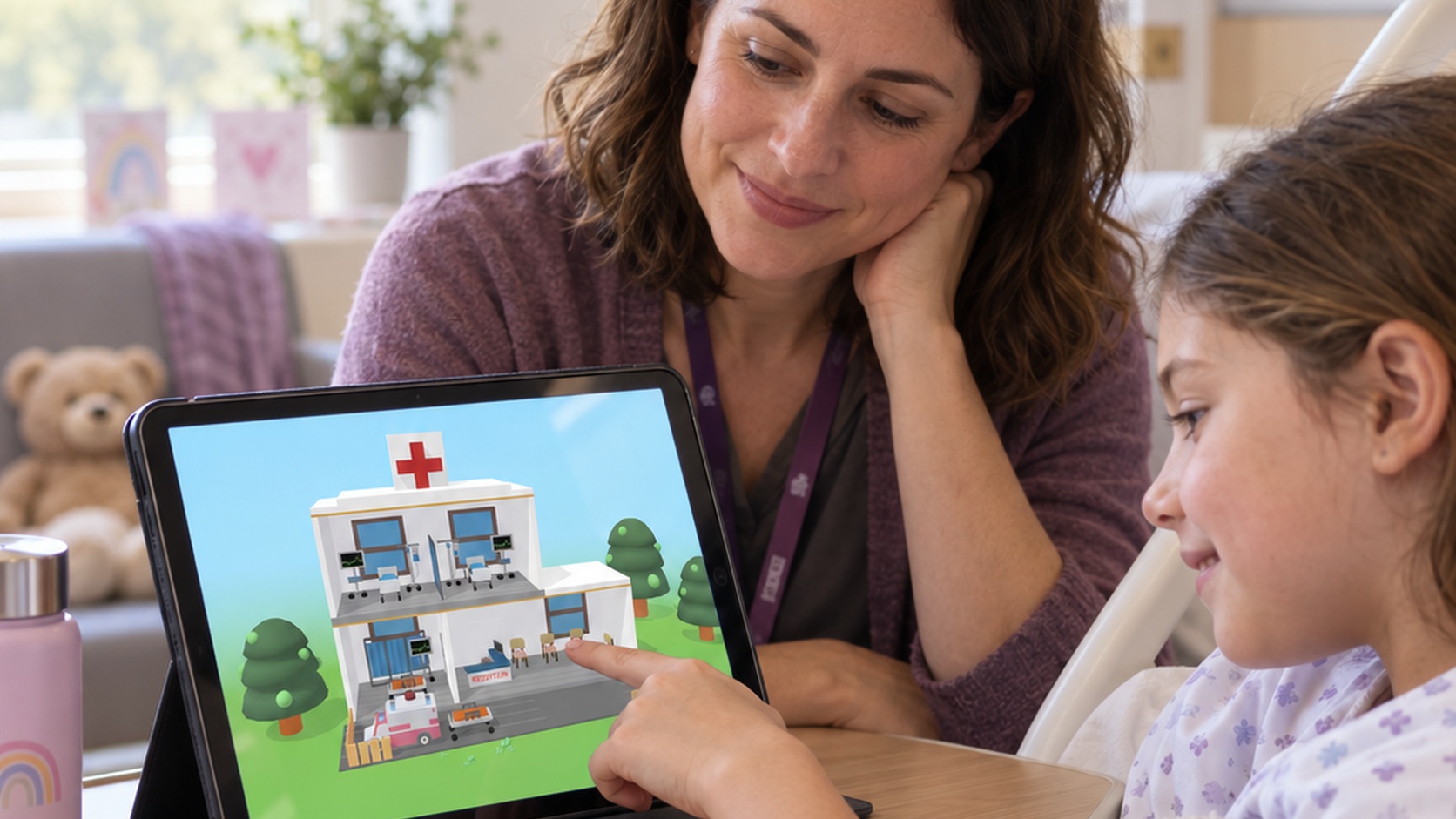
PlaySpace has responded to that reality with the launch of its new hospital dollhouse and expanded miniature figure collection. It is a purpose-built therapeutic environment designed specifically for children navigating medical experiences.
When a seven-year-old who is scheduled for surgery tomorrow picks up the doctor figure and begins directing them in the dollhouse, telling them exactly what to do, what to say, and how to treat the child in the bed, they are not playing pretend. They are reclaiming agency over an experience in which they have had almost none. They are rehearsing. They are preparing. They are processing fear in the only language they have.
That is play therapy. And the hospital dollhouse makes it possible in a way that no amount of careful verbal explanation ever could.
Child therapists who work with medically involved children will immediately recognize the clinical applications of a hospital-specific play environment. For those who are newer to this population, here is a breakdown of what becomes possible:
Children's understanding of their medical situation is often partial, distorted, or filled with frightening gaps that their imaginations have filled in with something worse than the truth. A child who believes their surgery might mean they won't wake up. A child who thinks the IV is taking their blood away. A child who is convinced they are being punished.
In the dollhouse, misconceptions surface in the play. The therapist can observe what story the child is telling about their medical experience and gently, within the symbolic frame, offer a more accurate narrative. This is psychoeducation through play, and it is extraordinarily effective with children who cannot process corrective information cognitively when they are afraid.
The hospital dollhouse is a major addition, but it sits within a broader PlaySpace ecosystem that was already serving hospitalized children well. Here's how other tools in the platform support this population:
One of the most clinically significant features of digital play therapy for hospitalized children is something that physical bedside therapy could never fully offer: continuity.
Children who receive psychological support during hospitalization and then lose access to it on discharge often experience a second rupture, one that compounds the original trauma of the medical event. The therapeutic relationship that helped them feel safe disappears at the exact moment they are re-entering a world that feels unfamiliar, physically changed, and emotionally overwhelming.
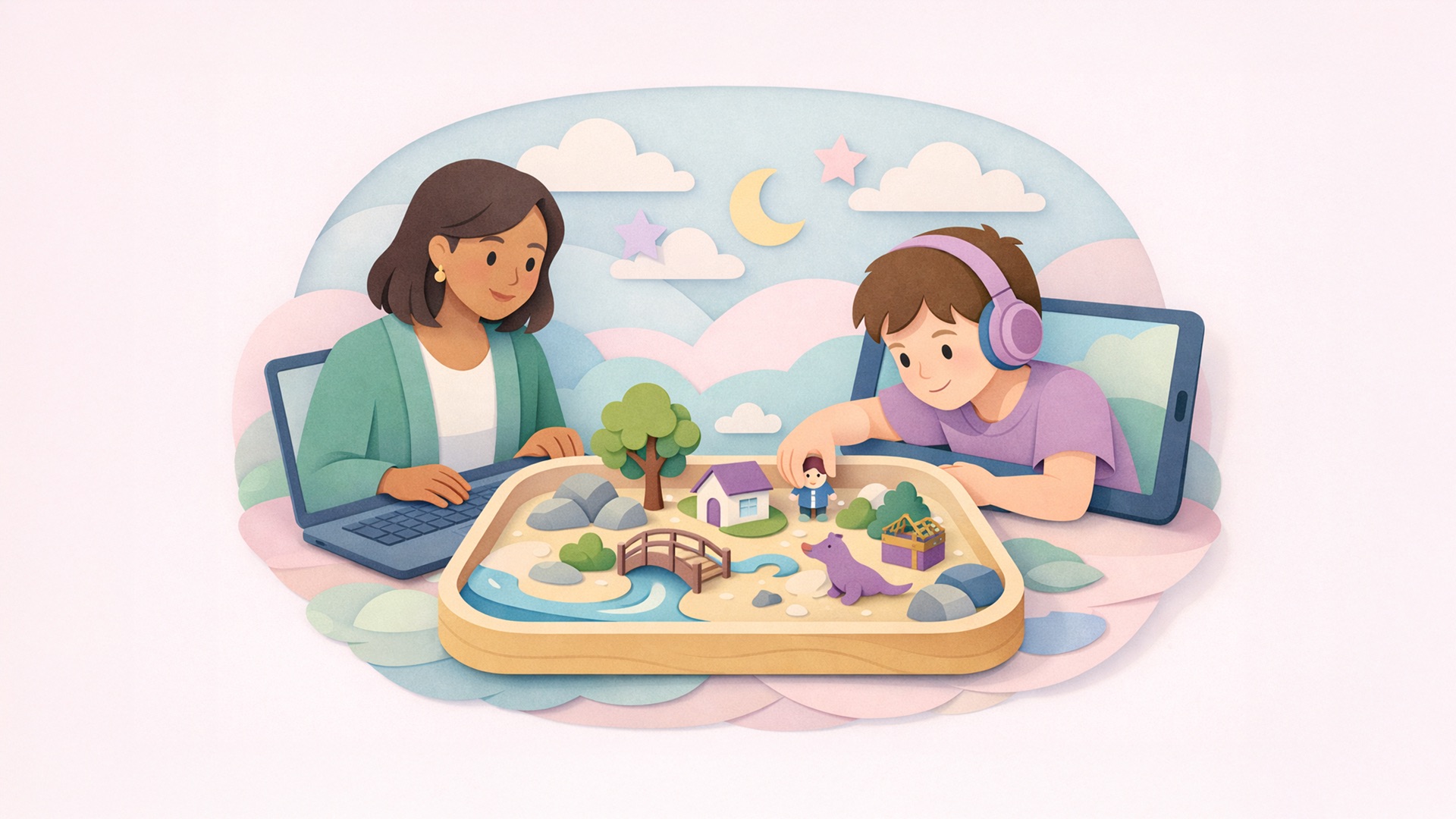
Because PlaySpace is fully virtual, a therapeutic relationship established at the bedside can continue without interruption after discharge. The same platform. The same tools. The same familiar digital environment. The same therapist.
For children managing chronic illness — oncology patients, children with cardiac conditions, and those with autoimmune diseases requiring repeated hospitalization, this continuity is not a nice-to-have. It is a clinical necessity. The therapeutic relationship is the treatment. And any tool that protects that relationship across the disruptions of medical care is doing something that matters deeply.
The hardest thing about working with hospitalized children isn't the medical complexity. It isn't the fragmented sessions or the uncertain prognoses or the parents who are barely holding themselves together in the family waiting room.
The hardest thing is the smallness of the room.
The way a child can become defined by their diagnosis, by their bed number, their wristband, their chart. The way the world outside that window keeps moving while everything inside it holds still.
Pediatric psychologists, child life specialists, and play therapists working in medical settings are doing some of the most extraordinary clinical work in our field. They are finding the child inside the patient. They are bringing play into a place that was designed for anything but.
PlaySpace's new hospital dollhouse is a reflection of that work and a commitment to it. It says: we see the children in those beds. We see what their world looks like. We know what they need to hold and turn over and reconstruct. And we're going to build them the tools to do it.
Because every child deserves a therapy that reflects their real life.
Even when real life is a hospital room.
PlaySpace is proud to introduce the hospital dollhouse and expanded miniature figure collection, including hospital beds, doctors, nurses, and medical equipment, as the newest addition to our play-based therapy platform. Designed for pediatric psychologists, child life specialists, and therapists working with medically involved children in any setting.
Explore the new features at https://www.playspace.health/ and bring the therapeutic power of medical play to every child in your care, wherever they are.
Lorem ipsum dolor sit amet, consectetur adipiscing elit, sed do eiusmod tempor incididunt ut labore et dolore magna aliqua. Ut enim ad minim veniam, quis nostrud exercitation ullamco laboris nisi ut aliquip ex ea commodo consequat. Duis aute irure dolor in reprehenderit in voluptate velit esse cillum dolore eu fugiat nulla pariatur.
Block quote
Ordered list
Unordered list
Bold text
Emphasis
Superscript
Subscript
.avif)
Subscribe to our weekly Newsletter
By clicking 'Submit,' you confirm that you have read and agree to the Privacy Policy, Terms of Use, and Customer Agreement.



.jpg)

.jpg)




.jpg)

.jpeg)